Best Open Source AI Tools
36 toolsThe best open source AI tools in 2026: local LLMs, image generators, voice models, and app frameworks. Self-hosted, free, and customisable.
Showing 36 tools matched to this page











About best open source ai tools
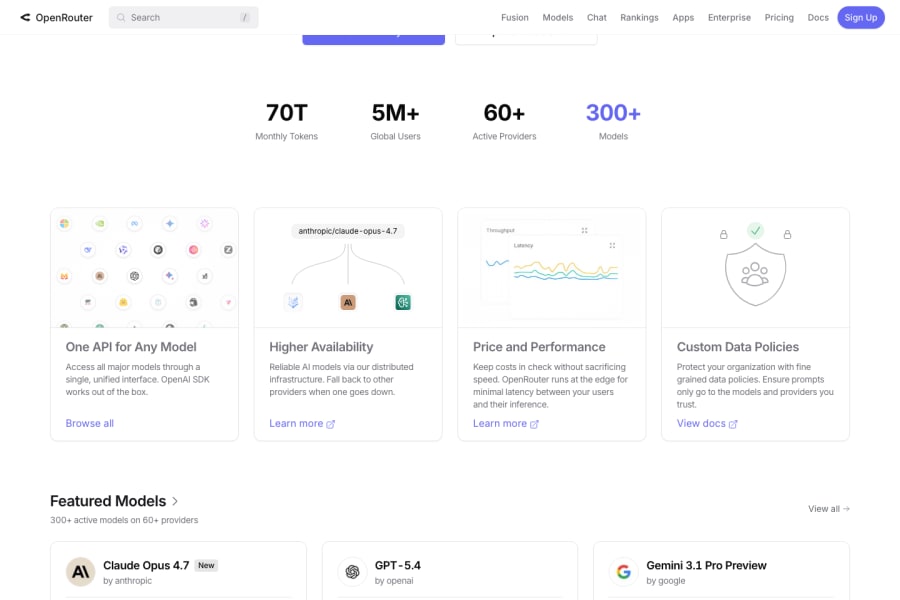
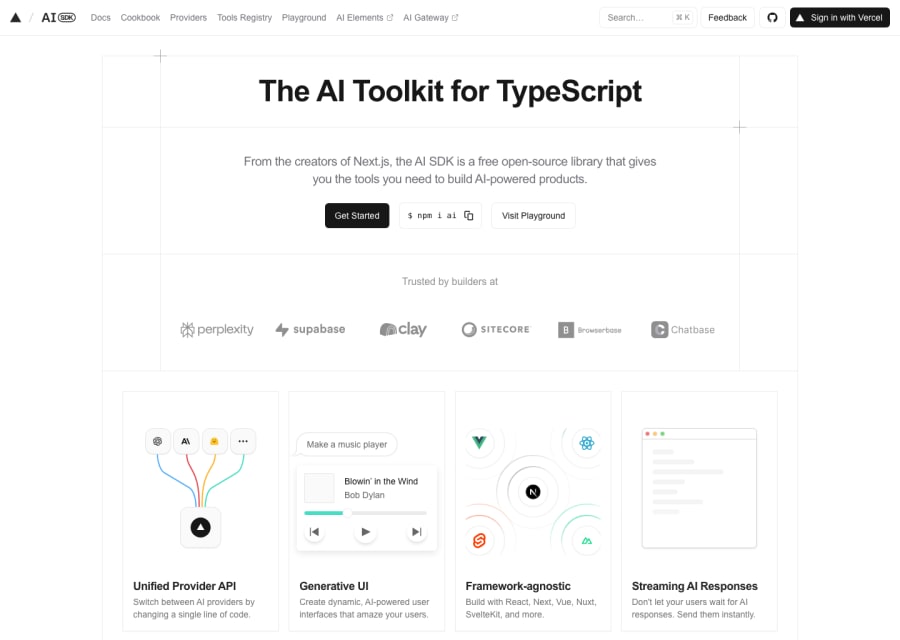
Open-source AI has matured into a full parallel ecosystem to the commercial offerings. Llama, Mistral, Qwen, and other open models now rival closed models on many benchmarks. Open-source image generation (Stable Diffusion, Flux), voice (Whisper, Coqui), and full-stack app frameworks give you complete control, local deployment, and zero per-query costs. This page ranks the open-source AI tools that are genuinely production-ready in 2026 — not just research projects that might be useful later.
Open-source AI offers three things closed tools can't: full privacy (nothing leaves your hardware), full customisation (you can fine-tune anything), and zero variable cost (no per-query fees after hardware is paid for). For any use case where data sensitivity, customisation needs, or cost at scale matters, open-source is the right answer — not the compromise.
How to use open-source AI effectively
More best-of AI tool lists
Common questions
Are open-source AI models as good as GPT-4 or Claude?
For many tasks — yes, the top open-source models (Llama 3, DeepSeek V3, Qwen) match or beat early GPT-4 on specific benchmarks. Against frontier models (GPT-4o, Claude 3.5+), closed tools still lead on the hardest tasks, but the gap has narrowed dramatically. For 80% of real use cases, open-source is good enough.
Can I run AI models on my laptop?
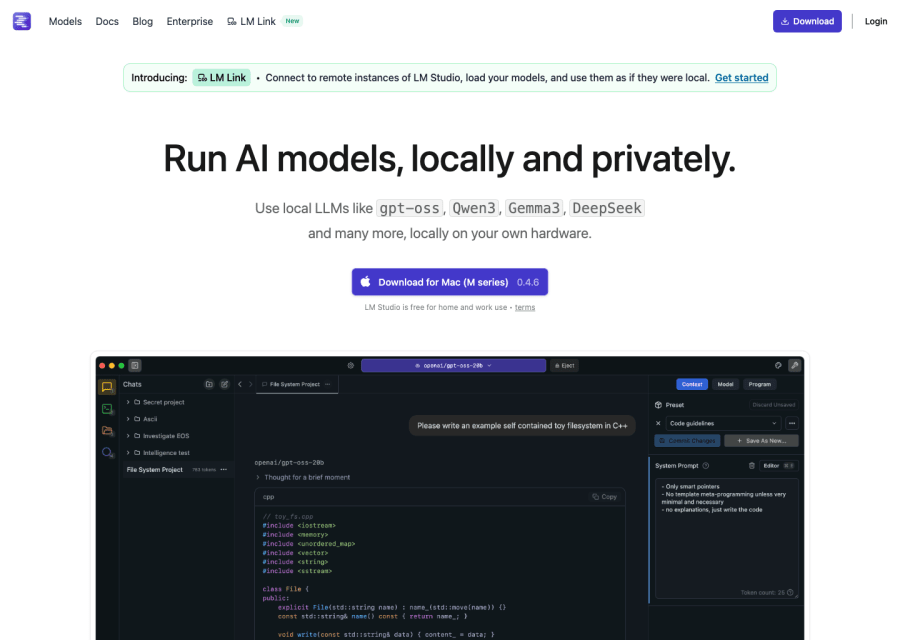
Yes, for smaller models. 7B–13B parameter models run on modern laptops with 16GB+ RAM (slower on Intel/AMD, faster on Apple M-series). Larger models (70B+) require serious GPU hardware. Ollama and LM Studio make setup nearly one-click.
Is open-source AI private?
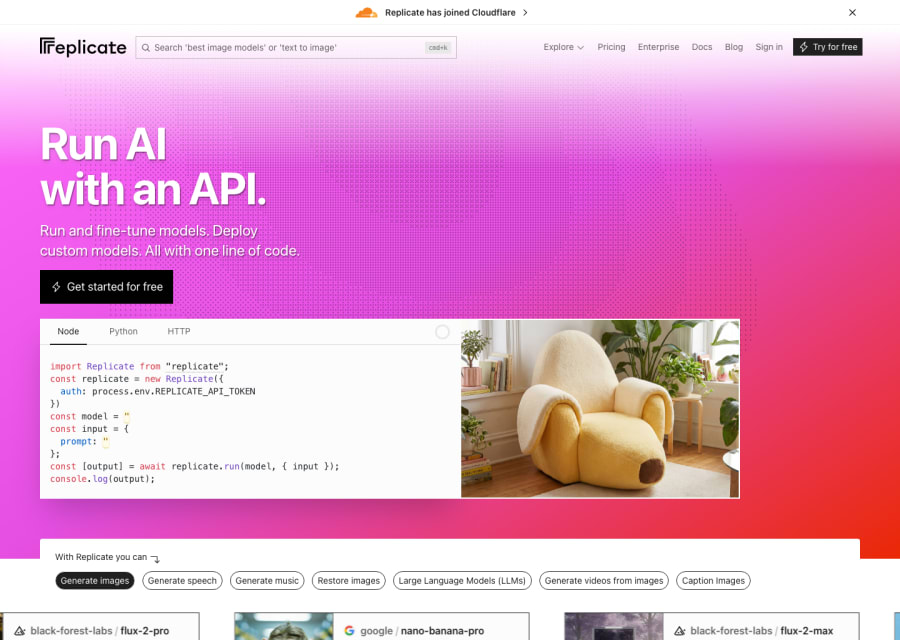
If you run it locally — yes, fully private by definition. Nothing leaves your machine. This is the biggest advantage for sensitive data (legal, medical, proprietary business). Hosted open-source services (Together, Replicate, etc.) are still closed from a data-flow perspective, even though they run open models.
How much does it cost to run open-source AI?
Locally — effectively free after hardware costs (GPU + electricity). Hosted open-source services run $0.10–$2 per million tokens, typically 5–20x cheaper than closed commercial APIs. For heavy use, the economics favour open-source substantially.
Is open-source AI safe for enterprise?
Often safer than closed tools for data-sensitive use cases, because data stays on your infrastructure. Self-hosted deployments with open models are increasingly the preferred choice for regulated industries (finance, healthcare, legal, defence). The operational complexity is higher but the data control is absolute.